Gen Z uses it for everything. We aim it at the one thing it was built to describe.
Most cleaning products contain chemicals that are harmful to you.
People know this. The green aisle still feels like a scam. Lavender scents and organic logos don't inspire confidence when you're facing mould, stains, and odors.
Gen Z call everything toxic. Everywhere except the bottle under the sink.
Relationships. Screen time. Group chats. The word lives in every text, screenshot, and screen-time alert. The metaphor feels urgent. The product never does.
Then point it at the only thing it was literally built to describe. Own the language. Own the category.
Own the word. Subvert it. Borrow the language people already use. Point it at the one thing it was built to describe.
"Your toxic ex won't change.
Your cleaning products should."
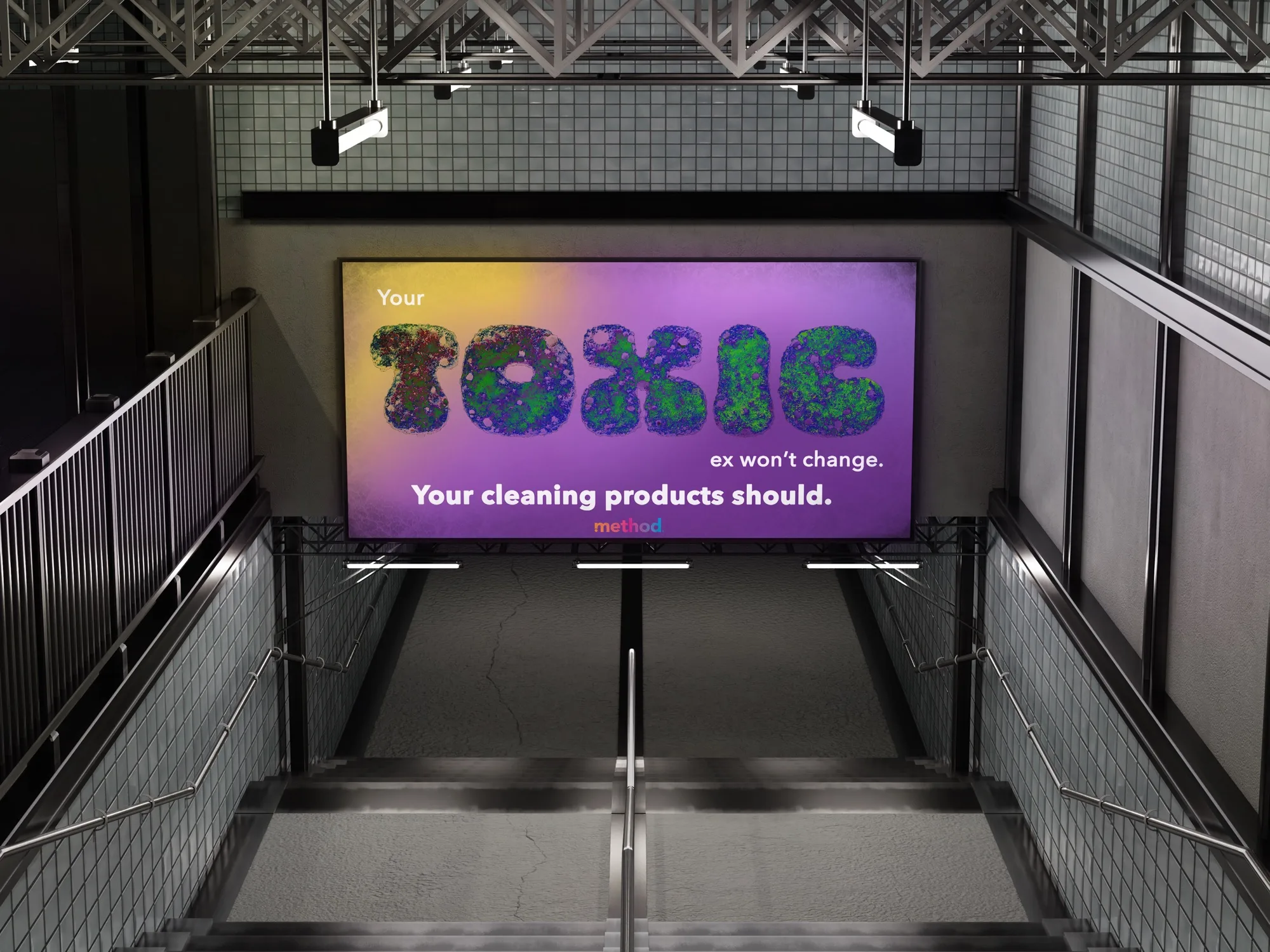
PlacementBillboard at the bottom of a subway stairwell. Eye-level at the landing.
CraftTOXIC in mold-textured decomposing letterforms. Bacteria you can feel from across the platform.
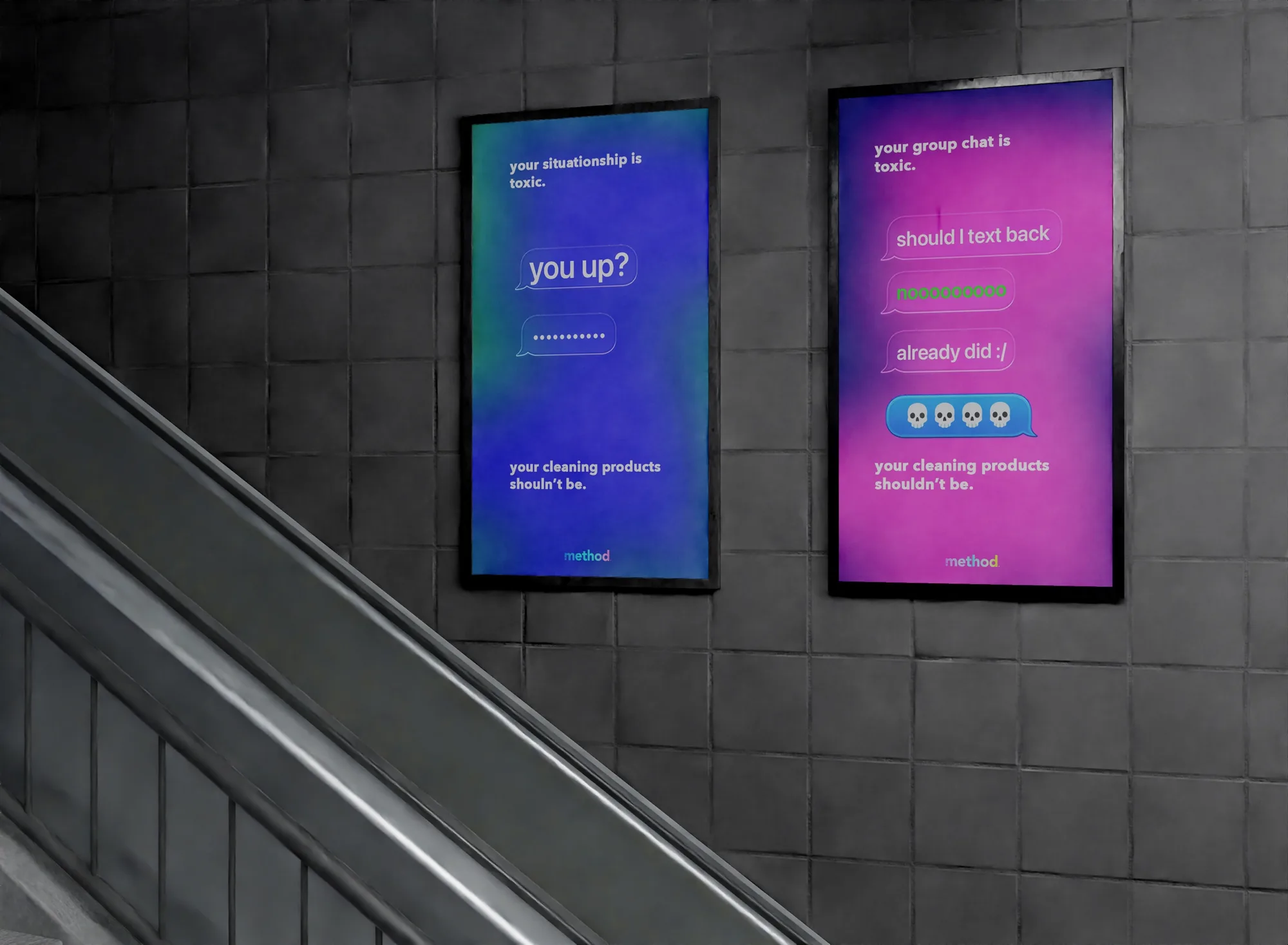
"Your situationship is toxic. Your group chat is toxic.
Your cleaning products shouldn't be."
PlacementTwo side-by-side subway verticals. Shown in sequence as commuters pass.
CraftLeft panel blue-teal, iMessage thread, late-night situationship energy. Right panel pink-magenta, group chat in full spiral. Same punchline on both.
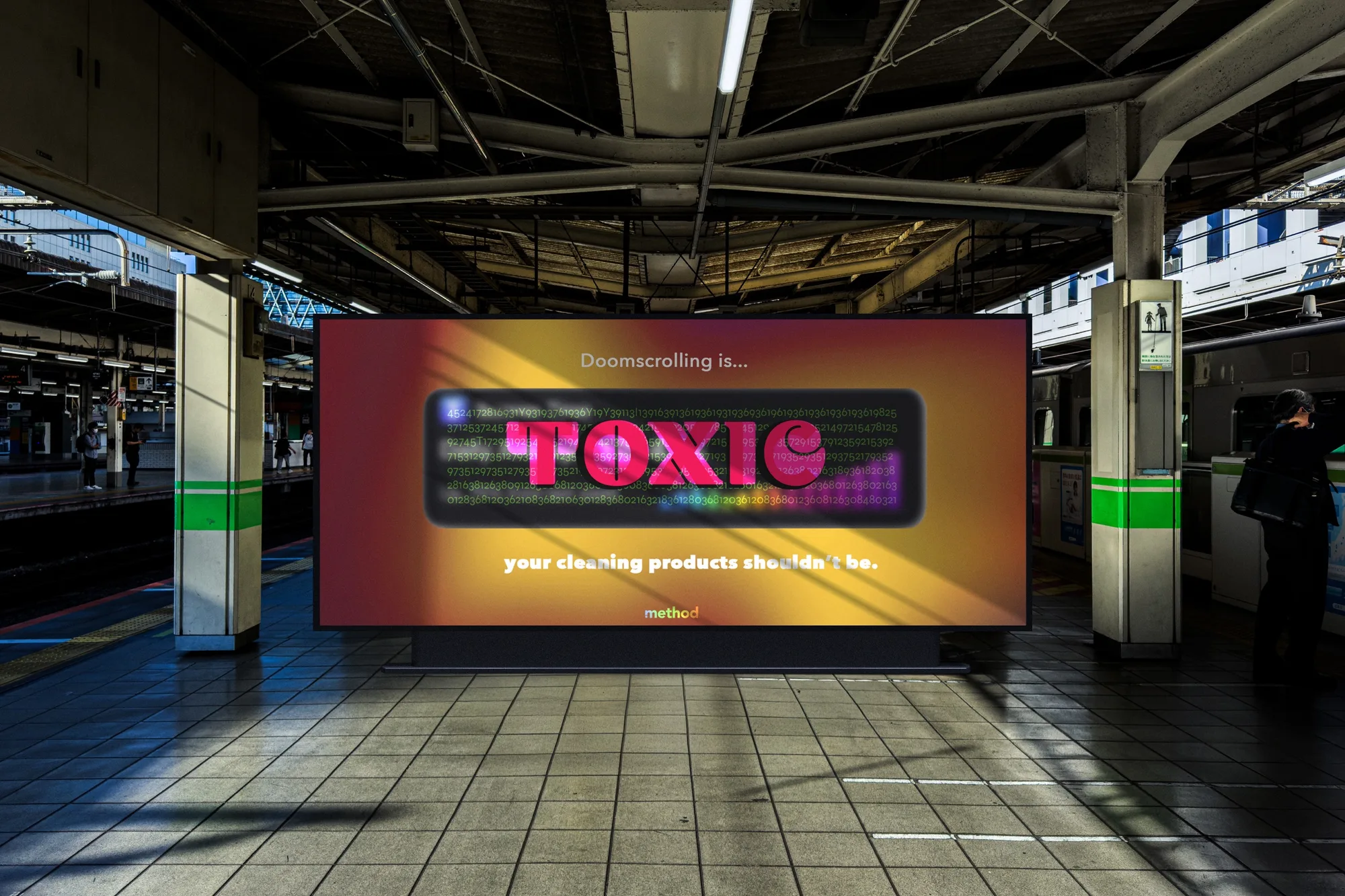
"Doomscrolling is toxic.
Your cleaning products shouldn't be."
PlacementBillboard in a train station. The thing everyone ignores every Sunday becomes the headline.
CraftWarm gradient backdrop. TOXIC in hot pink with a cascade of screen-time data running through it.
A limited TOXIC packaging drop. Bottle wrap shaped like an iMessage bubble. Sold in a three-pack tied to the billboards.
Prompt people to name something toxic in their life. We send a non-toxic kit to the best replies. Stitched back as UGC.
Target endcaps. The three billboards as shelf toppers. The shelf becomes the subway.
Method becomes the non-toxic default in a category where nobody else is having this conversation.